Change Me
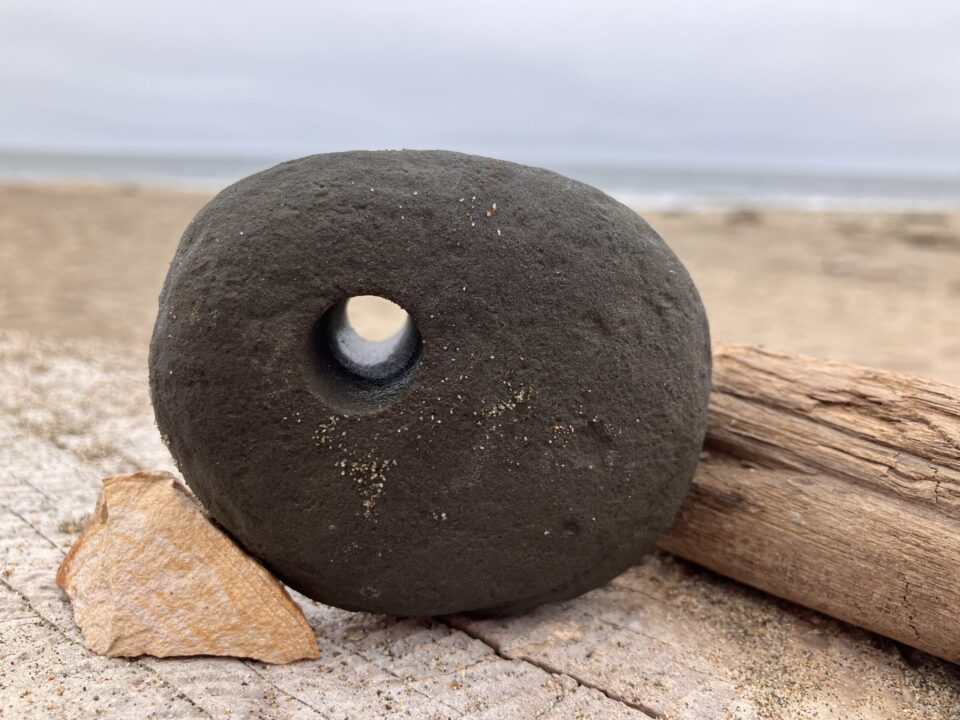
I can’t even remember why my spiritual director referenced Marcia Bjornerud’s new book, Turning to Stone: Discovering the Subtle Wisdom of Rocks (Flatiron Books 2024). It wasn’t to talk geology or even to invite me to read it necessarily; it was to make some sort of point. But when she said, “It’s by Marcia … something I can’t pronounce that’s Scandinavian,” I said, “I know that book!” I am the kind of mom who regularly skims my kids’ college alumni magazines, which of course come to my house. Even though they’ve graduated, I feel connected to them, to their journeys, to their destinations by connecting with their still comparatively recent university experiences. And I look for particular links, like when one of my son’s undergraduate mentors writes a new book, even if it’s about rocks. To have that title show up in any other context than the Lawrence University alumni magazine was, well, wow. I have a spiritual direction client who would call that “the hand of God.” That’s how I came to acquire Bjornerud’s compelling and highly readable amalgamation of memoir and geology primer, in which she brings rocks alive or more accurately helps the reader appreciate the aliveness of rocks, the actual substance of earth in new ways. Not only did the text help me begin to understand the geologically-oriented and mountain-loving mind of my son (now working on a graduate degree in geology thanks to Bjornerud’s teaching and mentoring) but it helped me grok that even the most stable elements in our lives are constantly changing, must change in order to stay alive, to grow, to nurture growth. The Jewish month of Elul, leading up to the High Holidays (Rosh Hashanah and Yom Kippur) is a season of reflection in which we are invited to consider where we are now and who we are becoming as we turn toward another year. We are invited to look back and expected to look forward. What change is required? What change will we commit to in order to become our better selves, our truer selves, more attuned to the Sacred, the Universe, God/dess, our divine spark within? Bjornerud illuminates that what geology has uncovered in the past century through the revolutionary idea/understanding of plate tectonics is “an ultraslow-motion planetary-scale respiratory cycle” in which the earth pulls surface level rock down toward the earth’s mantle through a process called subduction, and after a cycle of tens of millions of years “exhales” that matter again as volcanoes. This dynamic process keeps the interiors and exteriors of the planet in ongoing communication, shifting key components, like water and carbon dioxide, in ways that create the conditions for Earth’s “long-term habitability.” It’s why we, earthlings – all of us, not just human beings – can exist here, unlike any other planet in our solar system or any that we know of beyond. This movement of rock, this aliveness of earth, this slow-motion constant change is why we are here. Change is the key to sustainability, even for the seemingly solid earth that we stand upon. We might only feel it in the catastrophic (for us) moments of a major earthquake or volcanic eruption, but earth is constantly growing and changing, as are we. It can seem at times that our changes are moving at the pace of geologic time. Maybe we are ready for the next thing, or maybe we are hoping for stasis, and still, regardless of what we want, shifts are happening, in and around us. And we need that for our own sustainability. Change is what keeps us alive. I love this idea of the earth recycling itself. It makes me think of the plaintive text from Lamentations (5:21) that closes the Torah service, “Hashivenu Adonai eilecha, v’nashuvah chadeish yameinu k’kedem.” “Return us to You, O God, and we shall return. Renew our days as of old!” This sentiment is at the heart of this Jewish season, where we are called to do t’shuvah, returning, to God, to our selves, to our sense of purpose. But it’s not going backwards. Even though the move is cyclical, even though we are called back, we arrive in a different place, with new chapters in the story, with new understandings. In describing a student field trip, one she has done many times over the decades of her career, to a remarkable geologic outcropping in southern Wisconsin, Bjornerud observes, “Each time I come here, the rocks reveal something new; the eternal return brings deepening understanding.” The eternal return brings deepening understanding. Doesn’t it just? Return us to You. Renew our days. Bjornerud recounts the time when the Lawrence University geology department moved out of the more than 100 year old building it had been housed in. The more than 100 years of rock samples, a basement full, needed to be sorted and either moved or returned to the earth. In the course of the work she reflects, “I think about the paradigms that prevailed when [these rocks] were collected. The rocks have remained as they always were, while our interpretations of them have vacillated and evolved. The same is true for the events of our lives; the past is immutable, but its meaning changes with time.” We are not always just as we were. We vacillate and evolve. And so do our stories. Each time we come back to ourselves with an open mind and open heart, we find we have changed again. We see the past, present, and future differently again. Always the churning continues, in some seasons quickly like an earthquake, and in others slowly like the gentle slip of one tectonic plate against another, one inch at a time. From our vantage point, geologic change happens to us, much of it invisible, some of it catastrophic, all of it beyond our control. But our changes are not beyond our control. Some of life happens to us, and some we can control. What if instead of bracing for change, we embrace change…