Anti-Blessings

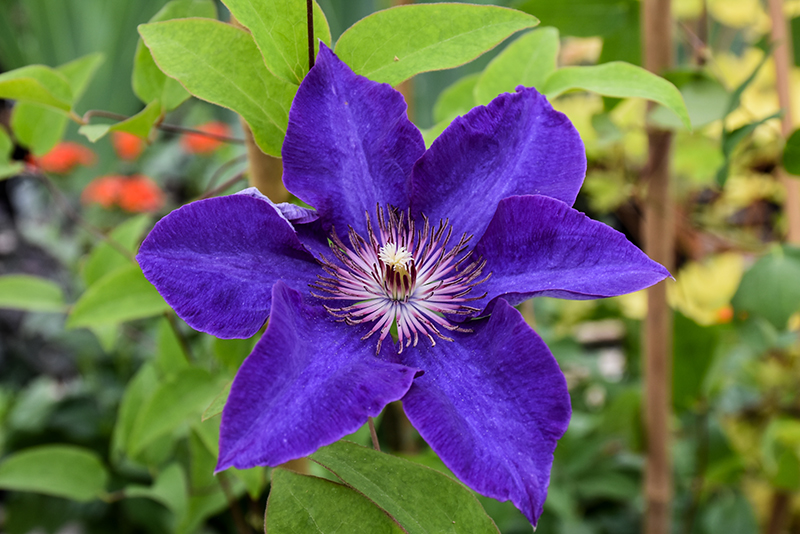
As she reached to pull the door shut, I wondered to myself, “Did she lock it? Does she have a key?” Instead of vocalizing either question, I trusted that she was on it. Surely mom could navigate a neighborhood walk without any intervention from me. So she pulled the door shut and we went on our way. These sidewalk-less rural roads are harder to navigate now that mom’s in her early 80s and less steady on her feet, dragging her left leg along while her stiff hips resist. With the increased traffic from the new housing complexes that have sprouted up on what used to be farmland, my attention was on safe movement. Do I walk on the inside where the ground is more uneven or closer to the street where I can be the one who has to jump out of the way if a car comes too close? I opted for the outside track and a friendly wave to every driver with half an eye on the terrain at mom’s feet while we chatted about the changing landscape, former neighbors, and the evolving life of this tiny corner of the world where my parents have lived for more than 50 years. As I intuited, when we got back to the house, the door was locked and the key was not in the little pouch mom had tucked into her pocket for the walk. We were locked out. Mom either doesn’t realize or resists acknowledging the marked decline in her memory and fluid thinking over these past few years. But at moments like these, she sees it all too clearly. Her confusion quickly pivoted to upset, at herself, for how dumb she is now, an expression of her frustration when she can’t miss the disconnect between who she is now and who she used to know herself as, still wants to be. Oh to lose your own sense of competency, of fully there-ness! We took a few deep breaths and turned to problem solving. Is there a hidden key? Yes, unhelpfully locked in the garage. Which now has a key pad! Does she know the code? A frown. A guess. A fail. We try every relevant four number combo we can think of, going through family birthdays, birth years, phone numbers, zip codes, in different combinations, before I give up. We try all the other doors to the house in case something might have accidentally been left unlocked (which would only indicate there was something wrong with my father, and there isn’t). Mom briefly considered breaking a window pane to unlock a side door and I quickly dissuaded her. My dad would be out golfing for another two hours. My phone was in the house. Miraculously my dad now carries his cell phone but since I mostly call the landline (the same number that I’ve known since I was 5), I have no idea what his cell phone number is. There will be no calling him from a neighbor’s house. Here’s the good news. It’s a perfect summer day, soft and comfortably warm. We ate breakfast and neither of us needs to use the bathroom. There is shade on the front step. And we are together. Amen. Our plan for the morning was to spend it together, and now we will be doing that outside. Kate Bowler, author, podcaster, professor of religion, cancer survivor, has a gift for claiming the divine in the difficult. Resisting our insta-posting, #blessing, faux presentation of the blessed (often carefully curated and filtered) moments of our lives, Bowler sees the concept of blessing as useful “for naming that strange mix of awful and lovely experiences in our lives. […] This is beautiful. This is awful. And all of it can be called true.” Without even the smidgiest of delusion about the awful being awful, the unlucky being unlucky, Bowler suggests we can look for the anti-blessing, the beautiful, funny, sparkly thing that is there anyway, and claim it together with what is impossibly hard. I can’t think of the last time I just sat still with my mom and gave her my full, undivided attention. Naturally our conversation started with stories about key mishaps. The call I received from the cat sitter just a week prior while I was in the airport picking up my rental car and she was at my front door with the wrong key, at the start of our 10-day trip (oops!), and how we solved for that. The time my brothers broke the basement window to get into the house after I dropped the extra key into a spot from whence we could not retrieve it. It turns out mom’s not stupid, just human, or at least that’s the case I’m making. Because mom’s conversational capacity is impacted by her memory loss, our conversation meandered and at regular intervals it stalled. Those silences were best of all. We watched the hummingbird come and go from the feeder. When was the last time I was still enough to notice a hummingbird’s tongue darting in and out as it sipped up nectar? I studied the clematis climbing the trellis next to the stoop, noticing some blossoms had four petals and others six. How strange! When I reached for my phone to find out how that’s even possible, my phone wasn’t in my pocket and I was just left to be present to the wonder, to the wondering. I watched a daddy longlegs walk in the flower bed and remembered how right in that spot my brother used to pull off their legs leaving just two (one for him to hold and one for it to point) and asking the spider, “Which way is daddy coming home?” A bizarre and horrible thing to be sure, but a core memory of summer, my brother’s courage (I hated spiders), and a peculiar kind of childlike inquiry into the natural and the mystical and where they meet. After about an hour, mom and I…

Where Am I?

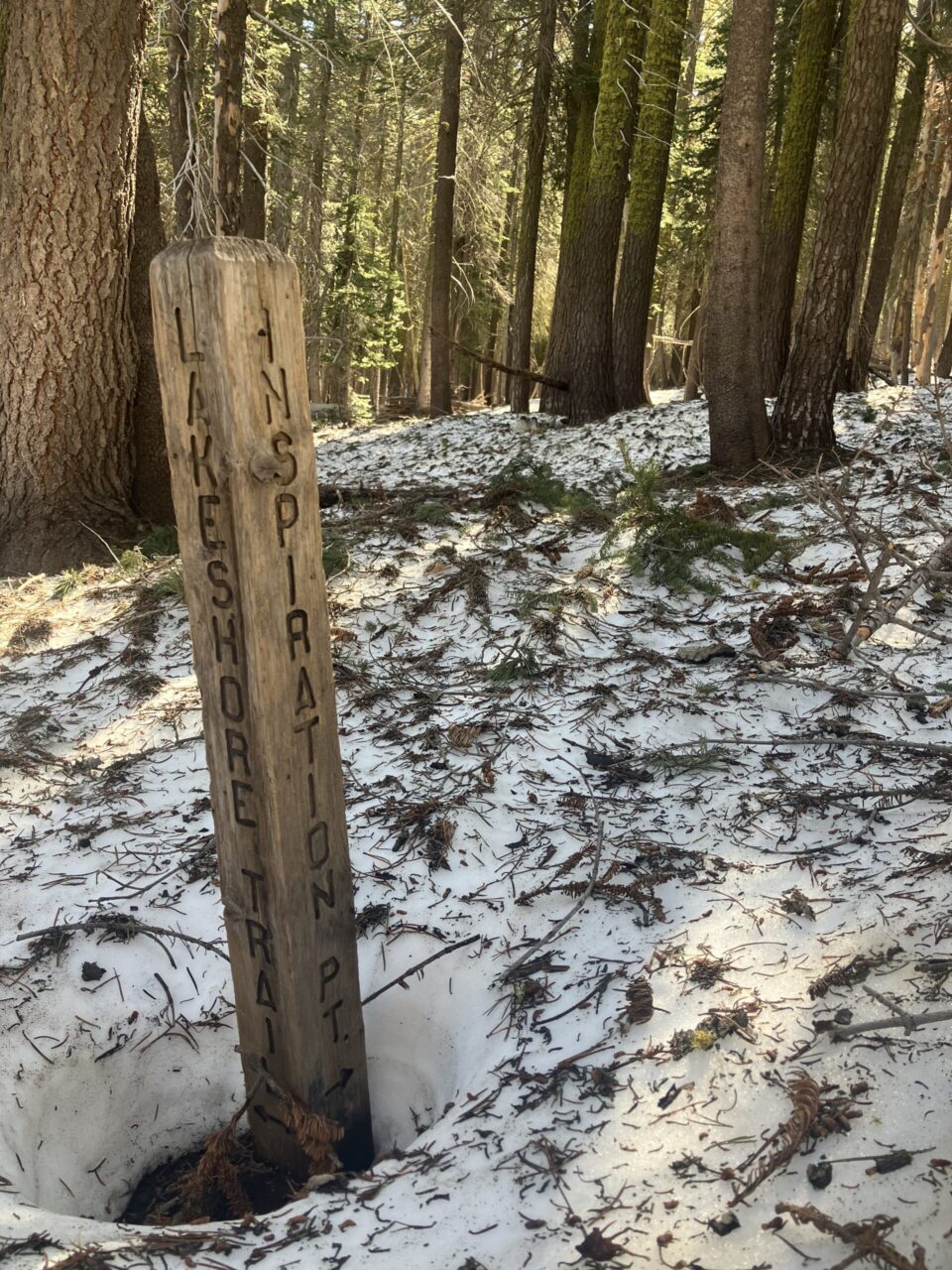
I started solo camping when my boys became men and, married twice over to non-campers, I realized I was on my own for the annual summer reset in the wilderness that my soul requires. After a couple of years of returning to a favorite spot in the Trinity-Alps, where I feel safe because I know the territory, I decided I was ready for a new adventure and set my sights on kayaking opportunities in the Sierras.   I found a perfect out-of-the-way lake ideal for kayaking. Determined to dive right into summer at the close of the school year, I blocked off my camping time for the beginning of June. A week or two ahead of my trip I went on-line to confirm my plan only to learn that my destination camping area was not yet open. In the High Sierras the snowmelt continues into July. Die-hard optimist that I am, I decided I would go up and hope for the best, having sussed out a nearby lake and camping area that was open as my plan B. I started my drive still hopeful, calling the ranger station from somewhere in the foothills in the hopes that since yesterday the site would have opened. When I came to the road closed sign, I finally accepted my fate and went to camping spot B.  Sitting at over 7,000 feet, there was still snow on the ground at Lake Alpine in early June. I am a fair weather camper. But I took a deep cold breath, put on another layer, and found a mostly dry camping spot. No surprise it wasn’t crowded. But the lake was beautiful. The kayaking was great. The night was very cold. And I was doing it! I was navigating new territory, all by myself.   The next day it was time to go hiking. I pulled on my boots and hit the trail. Before long I found myself hiking on the snow. Fair weather camper that I am, I’ve never hiked in the snow. The first thing you notice when hiking in the snow is that it’s hard to find the trail.  The second is that it’s hard to find your footing. My hiking poles were unhelpfully tucked away in my car and my boots were well-worn hand-me-downs on their last bit of tread. Again, ridiculous optimist that I am, I was certain it would be fine; I could totally find the trail and clamber my way up to the ridge I had chosen as my destination. I was maybe halfway up when the place where the trail might have been ran into a huge downed tree. It was as I was clambering around the tree that I finally slipped and fell on my butt. And at about that same time that I took in that I was in bear country alone with nothing but my own foolishness. I wasn’t lost yet because I could always orient myself to the lake, and I knew where I was trying to go, the ridge being obviously up, but hell if I knew how to get from here to there slipping and sliding along on the crusty snow.  When I was twenty-something, I had an REI water bottle that said something like, “You aren’t lost if you don’t care where you are.” I loved the freedom of that sentiment in a season of my life when everything was new territory waiting to be explored. But at fifty-something I’m rather more used to knowing both where I am and where I’m going, on the trail, and in life. Sometimes, on purpose or by accident, you have to step off the trail. A year ago, I metaphorically slipped and fell on my butt in my worklife. I was completely flattened by a stretch of non-stop labor piled on top of the accumulated effort of over two decades of energized invention and reinvention that I had put my heart and soul into. I was just done. All of my optimism and enthusiasm were drained out of me. I spent the next six months trudging up that hill until I made it to the ridge, where I could quit my job, my career (at least as I had been practicing it) and look out into new territory. I had no idea where I was.  In her book Third Ear: Reflections on the Art and Science of Listening, Elizabeth Rosner recounts a visit to a shaman during a writing retreat in Mexico. She is wrestling with sudden partial hearing loss that feels like a threat to her life’s work as a writer and teacher. In their time together, the shaman, “tries to explain the difference between feeling lost and feeling like I don’t know where I am.  That is when I must listen to my heart, he says. I must trust in the sound of the wind, the messages of connection, the voice of Grandfather Fire.” What is the difference between feeling lost and not knowing where you are? I think being lost is when you legit don’t know where you are or where or how to go from here. But not knowing where you are is finding yourself in new territory that you absolutely belong in, but don’t know how to navigate yet. You haven’t misstepped so much as taken yourself somewhere that requires re-orienting yourself and learning how to be in this new environment.  Spiritual teacher Cathy AJ Hardy teaches that these seasons of disorientation require us to slow down, until we can adjust to our new reality. In order to catch up to where we are, our souls need slow time. We need to wait a minute, or longer, before we get moving. That wait time allows us to attune to where we are, to who we are becoming, to how we might go forward. When we slow down we can hear our hearts, the sound of the wind, the connections that are calling us.  On my butt in the snow I sat…

Playing with Jewish Values, Literally

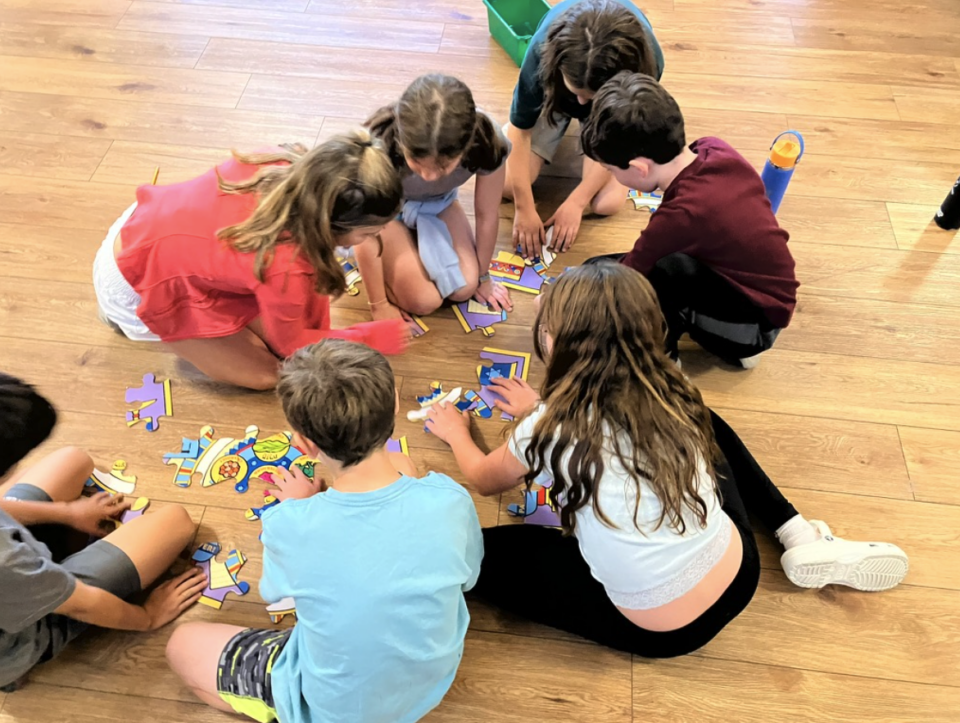
How do we bring the teachings of Torah, our Jewish ethics and values, into our bodies so that the impulse to live a righteous Jewish life is so close that it’s instinctive? Like everything we learn, it takes practice, practice, practice. Read about the year-long experiment I did with kids at Congregation B’nai Tikvah (Walnut Creek, CA): https://jewishlearning.works/2026/05/playing-with-jewish-values-literally/

Counting on Discipline

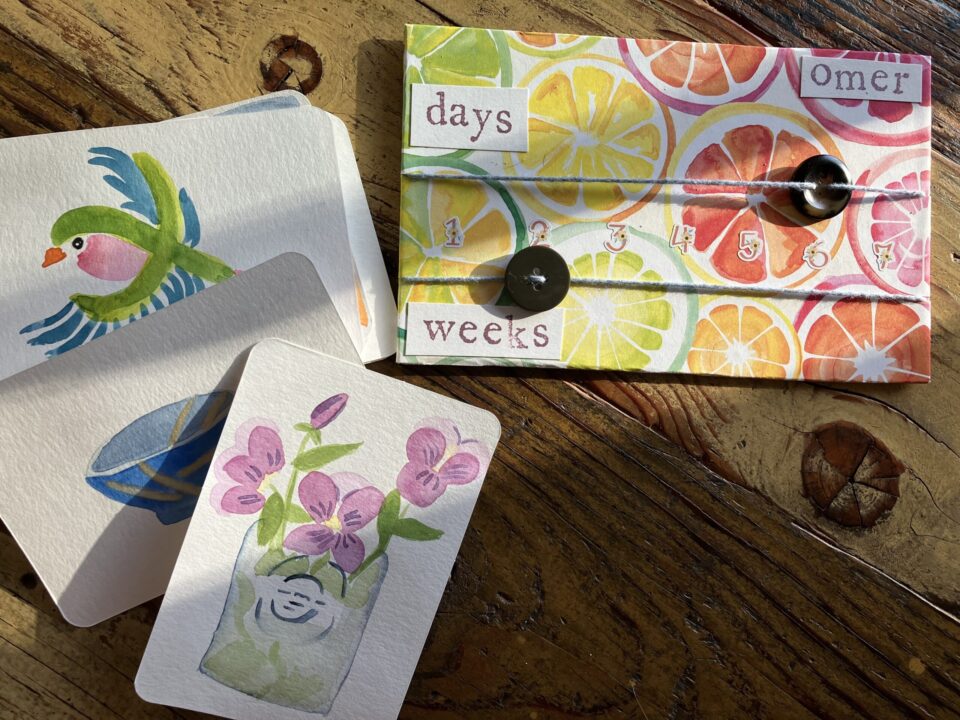
It’s the season of omer counting again. Each spring between the festivals of Passover and Shavuot, (many) Jews count seven weeks for a total of 49 days. In fact, it’s on account of the counting that Shavuot’s date is determined, 50 days after the first day of Passover. Back in the days of the temple,  Jews made an offering on Passover of freshly harvested barley. At Shavuot they were commanded to offer freshly harvested wheat. An omer is a sheaf of barley. Basically we are counting from one harvest to the next, enjoying our barley and hoping for a good wheat harvest.  After the exile from Israel, when Jews found themselves with neither a temple nor any harvests, the rabbis laid a new story atop the counting. Clearly Passover marks the Exodus from Egypt (that’s in the book!) so Shavuot must be when we received the Torah at Mt. Sinai.  Fifteen hundred years later (more or less), the Kabbalists (Jewish mystics) decided that what counts during this season is our spiritual readiness to receive the Torah again this year. To that end they created a chart mapping seven of God’s attributes onto the 49 days in an overlapping grid so that each week is anchored in an attribute that you are working on that week, with a different focus every day, coming from that day’s attribute combo. For example, week one is focused on chesed/lovingkindness. And each day crosses with another attribute, like strength, beauty, grit so that on that day you are invited to reflect on the intersection of strength and lovingkindness, say.  So what does it mean to count the omer? Just that. We say a blessing and we count. After dinner this evening, we’ll say the blessing that commands us to count the omer and we’ll say it’s day 20, which makes 2 weeks and 6 days of the omer. That’s it. Or at least that’s the mitzvah (commandment).  From there you can go as deep as you want to, or not.  To support you in this practice you can buy an omer counter, get a daily reflective email, use an activity driven workbook, engage your omer counting card deck, and yes, there’s also an app for that.  For many years I’ve taken up this mitzvah with everything from determined enthusiasm to a dull sense of obligation. I’ve done everything but the app, including making my own (slightly imperfect) omer counter. This year we are counting again at my house mostly because my beloved decided to paint daily reflection cards (which might be as much about the watercolor challenge as it is about counting the omer). Almost every year (honestly, maybe all of them) I bail out before we get to Shavuot.  At a minimum I lose interest, relinquishing my spiritual aspirations and settling for a tired (and tiresome) recitation at dinner each evening. This year I haven’t bothered to muster the enthusiasm. I just started with a “whatevs” kind of obligation and am honoring the art that arrives on my table each day.  In the many years that I’ve taught about this practice to people of all ages, I’ve always circled back to the original commandment, this idea of counting during these harvest days with a focus on waiting for the wheat harvest. I have this idea that the counting started as a way for Jewish farmers to pass the time and manage their anxiety about the harvest. “Is it ready yet?” “Nope! It’s only day 20, which makes 2 weeks and 6 days of the omer. We have a ways to go still.” With each day you can feel the possibilities growing (literally!) and you remind yourself that it’s not ripe yet. Not because something is wrong but because ripening takes time.  This year the omer arrived just as my life plan chart said, “Start a reiki practice.” Up to this point I had concrete steps to do. Rebuild your website, set up your reiki studio, make a marketing plan, start a substack, get business cards, practice, practice, practice. And then it was April and everything was in place, but the practice didn’t magically appear. I started to feel panicky. A little bit lost. Like my ancestors, I started to think back to Egypt where the work was impossibly hard but there was always food on the table. And I wondered, “Am I doing the right thing?” The spiritual focus for week number two of the omer is gevurah. Like all of the attributes, gevurah has a dizzying array of definitions in this context (You have to be a mystic to understand the omer chart.) all of which relate to strength, one of which is discipline. As a free-spirited Sagittarian I don’t really believe in discipline for myself or others. As a Hebrew school principal I actively avoided creating discipline policies, opting instead for deep community building. But this year discipline landed differently. I heard it not in the sense of getting in trouble or obeying rigid rules, but as a practice, a commitment, a way to cultivate yourself toward who you are becoming. Kind of like counting the omer. A discipline could be the thing(s) you do in the hope that it offers you a supportive structure as you do the hard work of waiting and/or ripening.  Inspired, I crafted for myself a discipline, a structure for this season, so that each day, as I wait for and work toward the ripening of this new practice, I am held by a set of daily practices that give my days shape, purpose and focus. To hold myself accountable (hello omer counter and cards) I put each practice on a card and designated a bowl for holding them. Each morning I empty out the bowl and through the day, as I complete each commitment, I fill it up again. I don’t know how quickly I will bail out, but so far it’s been one week and one day, and I am relieved and being held…

The Reiki is Calling

Two years ago I fell in love with Maui. Sometime during the six-week “Seriously, let’s move to Hawaii” campaign that followed, my wife inquired, what would you even do here? It was not an unreasonable question to ask a Jewish educator; there are not so many synagogues in Hawaii. I replied, without hesitation, “I’ll do reiki.” I’ll do reiki? What did I know from reiki?  I first encountered reiki when I was on a service learning trip in Rwanda in 2012. My travelmate was a trained body worker. One evening, I complained of a sore shoulder. Liora offered to reiki it. Why not? When she put her hand on my shoulder, it buzzed with energy and the pain dissipated. Amazing!  And that was it. One miraculous reiki moment and then nothing. What made me say I would do reiki twelve years later? I have been exploring chi or qi (in Japanese the ki in rei-ki), life force energy, in different ways over the years. I am a long-time receiver of acupuncture which works by opening up energy channels in the body to get your qi moving in order to promote healing. A few years ago, I started doing qigong, a movement practice for balancing your qi, exactly because I was trying to rebalance my energy. In some ways I guess I’d been attuning to qi for some time already. Meanwhile in my effort to be more impactful as a Jewish educator, I was drawn to the work of Dr. Lisa Miller, author of The Spiritual Child. Miller is a clinical psychologist and researcher working at Columbia University. She blew my mind open with her work The Awakened Brain: the Psychology of Spirituality. Miller explores the neuroscience of spirituality, demonstrating how spiritual practice and energy work measurably impact our brain chemistry. She talks about how our post-Enlightenment bias toward the logical or scientific mind and the skeptical mind has all but eclipsed our cultivation of our intuitive minds. Trained in that bias, Miller uses science to demonstrate the human brain’s hardwiring for mystical awareness and connection to source or what we might call qi. She demonstrates through clinical study how cultivating that aspect of our brain makes us healthier, mentally, emotionally, spiritually and physically.   I guess the groundwork for reiki was already being laid, or we could say I’m hardwired for it.  When we came home from Maui, I was determined to make my reiki vision into a reality. First I got a book from the library. Let’s just say it wasn’t reassuring. The origin story for reiki seemed utterly random; a vision/experience/knowing received on a mountain in Japan in the early 1900s by Dr. Mikao Usui. Is it a cult? And the way it works … moving energy with your hands, or not even, with hovering hands or at a distance. What?  I pushed my skeptical brain down and persisted. I found a handful of training programs around the Bay Area. They mostly felt too woo-woo, a little culty, unclear in their structure. There was one reiki training center I found in San Francisco that seemed not too out there. When I went to check it out it was a comedy of errors. I literally was blocked at every door trying to find my way. And when I made it, I was told I was doing it wrong. Which I was. I was in the wrong place at the wrong time for the wrong thing. They gave me a little reiki and sent me on my way with no clear direction and a totally negative vibe. That was not the way forward.  I couldn’t figure out how to proceed, and I kept stumbling into reiki. On a hike one day my friend Eli, a retired body worker with reiki experience, got me playing with the feel of the energy between my hands. My friend Ruby, when I started to explain my interest in reiki, told me she’s been trained for years and does distance reiki for her adult daughter when she needs healing. Finally I stumbled into a conversation about this reiki quest with my friend Denise. She was alive with enthusiasm and insisted that I talk with her friend Bea, a reiki master back East.   God bless, Bea. I told her my whole stupid story and how even though reiki seemed to be all around suddenly, I couldn’t figure out how to access it. “Well,” she said, “clearly the reiki is calling.” I don’t know why that simple statement made all the difference but it really did. The reiki is calling. Those four words enabled me to sidestep the nagging reservations of my skeptical brain and open myself all the way up to finding this practice. Bea coupled that affirmation with a super clear next step. “Don’t look for a training program,” she said. “Just go and get some reiki.” I mean, duh.  Whenever I searched before for local reiki practitioners, I had a puzzlingly hard time finding people. After this conversation with Bea, when I looked again, I had so many choices, and they mostly looked great. I picked Adriana Parrish at East Bay Healing House. Within three or four reiki sessions Adriana had my undiagnosable stuck shoulder that for a year had resisted physical therapy, massage, chiropractics, and acupuncture, and naturally showed no damage on an x-ray, moving again, like it was never injured. I began to understand what reiki could do and how it works.  Adriana became my teacher and just over two years after that first trip to Maui, I’m launching a reiki practice. We’re not moving to Hawaii, but if/when we do, I’ll be ready. As Gloria Steinem once said, “Dreaming, after all, is a form of planning.” What are you dreaming of? What is calling you? Is there a first “duh” step you can take in that direction? Let’s keep dreaming and see what possibilities unfold.

Pay Attention!

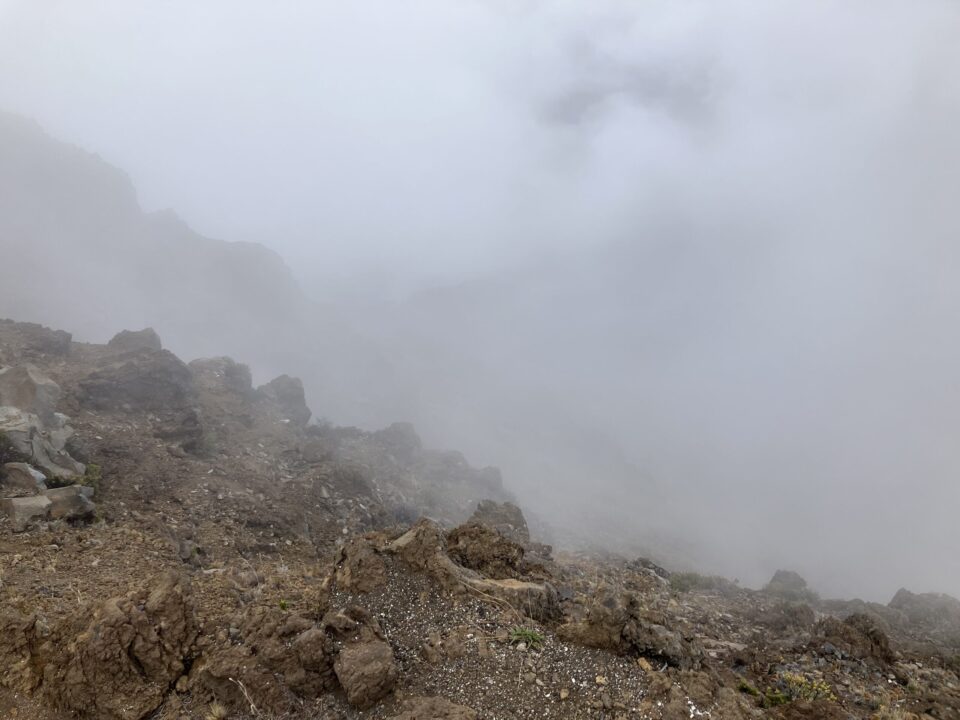
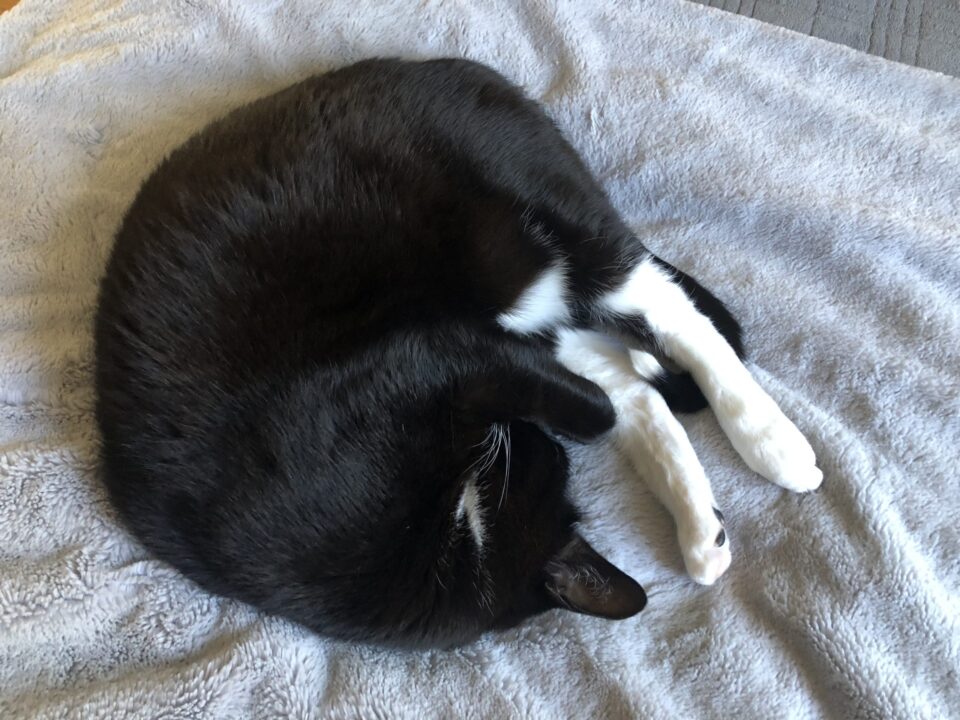
All fall, maybe even back into the summer, my cat Grace was on a mission to get me to pay attention.  Grace has been training me for some time to get on the floor to pet her.  To show her affection is to be directed to relocate yourself to the floor where this taciturn creature will suddenly open up and quietly purr, luxuriating in your presence until she is moved to lovingly, and painfully, bite your fingers.  She’s so soft that it’s worth it, until it isn’t.  Through the summer and fall months, as I was taking the critical first steps away from my life of all-work-all-the-time toward something new, Grace would lie on the floor of my prayer/meditation/yoga room, next to the meditation pillow and wait for me.  I mostly noticed her as I was racing past the door, bustling about, doing one thing and then another.  She would look at me expectantly each time.  After a while, I began to snap back, “I know, Grace.  It’s time to sit still,” as I rushed to the next thing.  The first time I went to Maui two years ago I tried to convince my beloved that we could, that we must, move to Hawaii, because on Maui, I am healed and whole.  So when we returned this January (only for a week, not for good), I showed up ready for the next round of healing and wholeness.  My son, who spent most of a year on Maui doing environmental clean-up following the destructive Lahaina fires (in August 2023), now had loads of recommendations.  Among them was to visit the summit district of Haleakala National Park which he described as, “easily one of the most magical and unearthly places I’ve been.” This from someone who has hiked thousands of miles, driven across the country and back again, and summited dozens of mountains, including Mt. Whitney and any number of “14ers” in the Rockies and other Western US mountain ranges.  This is how I found myself winding my way up up up from the warm sunny beaches to the chilly misty rockscape that is Haleakala’s summit.  In a time of transition I was seeking something magical, mystical, amazing.  I was ready for the mountain to speak to me, heal me, call me.  Let’s go!  First, it was cold.  I knew it would feel cold relative to the balmy perfect beach below, but it was like being back in the Bay in the wintertime.  At the summit it was colder.  Also it was foggy, just like home, damp and cold foggy.  Sometimes I could see the ocean below, but mostly not.  And it was rocky, not easy joyful hiking, but watch-where-your-feet-are hiking.  Also it’s “at elevation” (as my mountain climbing son says), so there are warnings about altitude sickness everywhere, which made me hyper vigilant about water and snacks.  Finally, every hike is into the crater and out of the crater, down and then unfortunately up.   Undeterred, I stayed open to the magic.  There’s the nene, the very cool looking Hawaiian goose.  There’s an impressive view.  I got my camera out, “Oops – it’s gone!”, because the mist has moved in.  Here’s the informational display of what I would see were the mountaintop not enshrouded in clouds.  Here’s what it feels like to be hiking up and up and up along the naked rocks in the cold, and now also in the rain.  After two hikes, a wander around the summit, and a determination that I was not going to have enough time to look for the other endangered birds up here, I told myself that it was a perfectly good explore and time to give up on the magic and just take my butt back down to the sea.  Foolishly, and perhaps only motivated by a need to use the restroom, I made one final ranger-recommended stop at an overlook that was buried in cloud cover.  I looked to one side and saw nothing.  I noticed the only other people at this stop making their way to the other side of the overlook and shook my head at them but then followed.  A man was leaning against a fence at the highest point, arms out Titanic style, while his travelling companion took a photo.  That was enough to make me curious.  I went over there after he stepped away to take a look.  This is what I saw:  Finally I started laughing.  OK.  I have tried everything, and nothing is going to be revealed up here today.  There is no magic. No message.  No need to be this cold right now.  So I leaned into the fence and closed my eyes, releasing my expectations back to the mountain.   A minute later, maybe it was two, I opened my eyes and this is what I saw: Now the mountain had my attention; I just watched.  A few minutes later:   I stood in awe watching the crater below appear and disappear again before my eyes.  It turns out what the mountain had been trying to tell me all day is just what Grace had been saying for months. “Sit still, and pay attention.” Because when you do, all will be revealed. Like the cat, the mountain will open itself to you.  Philosopher-mystic Simone Weil wrote in Gravity and Grace, “Attention, taken to its highest degree, is the same thing as prayer. It presupposes faith and love.  Absolutely unmixed attention is prayer. If we turn our mind toward the good, it is impossible that little by little the whole soul will not be attracted thereto in spite of itself.”  What is asking for your attention today? Can you sit still long enough to notice it, or are you too busy tasking or seeking? Sit still. Pay attention. Who knows what might be waiting for you.

Shema: Listening as Prayer

I was honored this winter to contribute to Jewish LearningWorks’ SoulFull Sources, a collection of resources for teaching Jewish spirituality. Teaching kids (and people of all ages) how to play with the tools of our traditions to find stillness, awe, and connection to the Sacred might be the most important work educators can do to help them navigate our complex world and the experience of being human. You can see more and download the resource here: https://jewishlearning.works/curricula-guides/spiritual-ed/

Active Hope: a Rosh Hashanah Sermon

What are you afraid of?  What keeps you up at night?  Is it something immediate?  At work or school?  With your family?  Is it money or health?  What about the global fears?  The international rise of fascism and the future of democracy?  The pressure cooker of our culture and the hazards of our new technologies?  The growing loneliness epidemic?  The fragility of our planet?  The security of the Jewish people and the very real costs of maintaining that security, or its illusion?  We live in a fear-soaked culture where our 24-hour news cycle and the miracle/gift/hazard of having it at our fingertips, in our pockets and on our wrists, gives us a constant portal into a world of fear, a world reacting from fear, as if the everyday fears and challenges of our lives weren’t sufficient to put us all on edge.   Years ago I read a book by an author I can’t recall with a title I can’t remember (I’ve tried so hard to find it over the years, and failed) that changed forever how I think about fear.  This author had a terrible horseback riding accident which led to a long and painful recovery.  When she was well again she was desperately afraid of getting back on a horse and really any manner of risk taking.  In response, she became determined to make fear her friend.  She wanted to be able to look over and see fear and acknowledge it without wishing it away.  She realized that fear was going to be with her now, in a new way, and she didn’t want it to stop her from a robust and amazing life.  So she practiced taking fear along on her journey.  Each year she would set herself a new challenge, dog sledding, skydiving, slot canyoning, scary stuff that required navigating fear.  And she worked with intention on her capacity to be with fear without letting fear run the show.   The creators of the Pixar film Inside Out, imagine for us, literally draw for us, a picture of a control board in our brains where various emotions take turns managing the wheel, as it were.  The effect is funny and deeply thought provoking, based as it is, on actual brain science.  In the original film there are five core emotions, one of which is fear.  Now when I think about taking fear along, I can picture him: he looks like a skinny purple guy in a bowtie.  He’s funny and cute but we all know that having fear at the wheel is exhausting, unsettling, and limits our capacity to be whole people, healthy communities, and capable world builders.   When I was a kid, my family of five would sometimes pile into my grandfather’s Oldsmobile, together with my grandparents, to make the short ride to church.  Why we did not take two cars I do not know.  It might have had something to do with limited parking, something we at CBT know a little about.  But for whatever reason, my older brothers were always in the back with my mom and grandma.  And as the little girl, I was always wedged in the front between my grandpa and my dad.  This was in the days when car seats were like benches, so that front seat went straight across, no bucket seats, no middle console.  Still it was a squashy affair, wedged there in between dad and grandpa and trying to stay out of the way of grandpa’s driving.  I didn’t love it, but it was a short ride. I want to imagine this evening what it would look like to reorganize our front seats to be more like my Grampa’s Oldsmobile on those rides to church.  What if we could take fear out of the driver’s seat, not by banishing him to the trunk or the backseat through denial or distraction, pretending he isn’t there.  I want us to be honest about fear …  and I want him to slide over onto the passenger’s side, where my dad sat.  And then, in order to keep him over there, I want to invite you to tuck hope in between, like the squashy little girl I was.  I want you to make a little bonus space to nestle in some hope, as an antidote, or maybe even just a margin, a soft barrier, something to give us a little space from fear.  How would the short ride of this day, this week, this month, or the long ride of this life, change if hope were wedged into the front seat – making space between you and fear?  Eco-philosopher Joanna Macy and resiliency trainer Dr. Chris Johnstone in their book Active Hope: How to Face the Mess We’re in without Going Crazy assert that hope has two meanings.  The first is a passive kind of hope, a simple wishfulness for what we want to be true to happen.  It’s an ephemeral kind of hope, easily squeezed out of the front seat when fear leans over to try and take the wheel.  It’s not solid enough to ground ourselves in, to hold the space.     In its place Macy and Johnstone want us to consider practicing active hope.  They write, “Active Hope is about becoming active participants in bringing about what we hope for.”  Active Hope is about becoming active participants in bringing about what we hope for.   They continue, “Active Hope is a practice. Like tai chi or gardening, it is something we do rather than have. It is a process we can apply to any situation, and it involves three key steps. First, we take in a clear view of reality; second, we identify what we hope for in terms of the direction we’d like things to move in or the values we’d like to see expressed; and third, we take concrete steps to move ourselves or the situation in that direction. “Since Active Hope doesn’t require our optimism, we can apply it even in areas where we feel hopeless. The…

Opening Ourselves to Rest

I don’t know about you but I remember as a kid longing for summer to start.  We would joyfully hurl ourselves into freedom on the last day of school.  By upper elementary/middle school that would include the defiant singing, chanting really, of Pink Floyd’s “We don’t need no education…”  It was true liberation.  One of the things I love about being an educator is that I still get to experience that wild joy of the end of the school year, deliciously anticipating three months of actual weekends and spaciousness in my work with time to think and dream and create.  Amen. I’m so grateful to have work that has an ebb and a flow, and especially an ebb.  It’s when the tide is out that all the wonders of the sea appear, that you can discover and imagine.  I remember the extreme boredom of those dog days of August from my childhood.  We had done every fun thing summer had to offer already and were longing for school to start again.  Now we live in a culture that eschews boredom like the plague filling every waking moment, for everyone of every age, with activities and digital media and diversions of all kinds.  Our capacity to be still long enough to even discover what might be calling us seems to shrink by the hour.   I recently heard writer Anne Lamott say, “If you want to be a writer, look at your do-list and take two things off of it.”  Because writing requires time and attention.  It requires space to notice, to think, to let your mind wander.  Really if you want to be a human, look at your do-list and take two things off of it.  Or if your do-list is like mine, take ten things off!   Because being a person, really being a person, requires spaciousness and time to be still, to follow pleasure, to get curious about what’s around the corner, even if you didn’t plan to go there.   Tricia Hersey, creator of the Nap Ministry, writes in Rest is Resistance: A Manifesto, “Rest makes invention and imagination accessible. Rest gives us the ability to test our freedom. Our souls are calling to see differently. To move differently. To feel differently. To rest. Rest as a subversive act. The deepest act of resistance.”  Hersey is especially concerned with the extraction of labor from Black and Brown bodies in our white supremacist capitalist culture.  In that context rest is not just personal resistance to our culture but a political act.  Regardless of the body you find yourself in, Hersey’s passionate call for personal and collective push back against a culture that demands that we do more in every waking moment, and sometimes even in how we manage, measure, and perform the act of sleep, is intended for you.  Notice that Hersey doesn’t say that rest makes you more productive, kinder, able to be a better person.  It makes you free.  It makes you a whole human being.  It makes you bigger than your do-list, your job, your role as a parent, spouse, caretaker.  It opens up possibilities for who you are becoming in ways you otherwise don’t have the time or attention to notice.   My beloved will laugh when she reads this because I am the worst kind of sit-stiller.  I am a no-napper, what’s the next thing, how can I use every waking hour to squeeze out more more more kind of person.  Consequently, when I teach about rest as a spiritual practice, usually linked to Shabbat, I invite people to consider that rest can be active.  For me rest is the space where I can lose myself in doing, or move in a way that allows my mind to wander.  It’s hiking and gardening and kayaking and making art.  Inspired by the coming of summer, I have already scheduled two solo camping trips and a bookbinding class at the Crucible and I have recently started a qi gong class.  Each of these adventures invites me into a different part of myself, where I can joyfully explore, discover and create.   The great hasidic teacher Rabbi Nachman of Breslov said, “Always remember, joy is not incidental to spiritual quest. It is vital.”  Joy, rest, possibility, spaciousness … What is awaiting you this summer?  How can you make room for it?  

Finding Your Authentic Soul Sound through Spiritual Direction

I had the pleasure and the privilege of sitting down with Lisa Moriah to talk about my roles and the meaning behind them, my own journey as a Jewish convert, and the intimate journey of transitioning from one spiritual foundation to another. We also explored the concept of reclaiming aspects of previous traditions and the exploration of the Divine Feminine. (Wasn’t Mary just a Jewish girl?)  And we talked about the spaciousness in Jewish practice.   You can listen here: https://podcasts.apple.com/us/podcast/soul-sounds-podcast/id1712253654?i=1000639431623