Active Hope: a Rosh Hashanah Sermon

What are you afraid of?  What keeps you up at night?  Is it something immediate?  At work or school?  With your family?  Is it money or health?  What about the global fears?  The international rise of fascism and the future of democracy?  The pressure cooker of our culture and the hazards of our new technologies?  The growing loneliness epidemic?  The fragility of our planet?  The security of the Jewish people and the very real costs of maintaining that security, or its illusion?  We live in a fear-soaked culture where our 24-hour news cycle and the miracle/gift/hazard of having it at our fingertips, in our pockets and on our wrists, gives us a constant portal into a world of fear, a world reacting from fear, as if the everyday fears and challenges of our lives weren’t sufficient to put us all on edge.   Years ago I read a book by an author I can’t recall with a title I can’t remember (I’ve tried so hard to find it over the years, and failed) that changed forever how I think about fear.  This author had a terrible horseback riding accident which led to a long and painful recovery.  When she was well again she was desperately afraid of getting back on a horse and really any manner of risk taking.  In response, she became determined to make fear her friend.  She wanted to be able to look over and see fear and acknowledge it without wishing it away.  She realized that fear was going to be with her now, in a new way, and she didn’t want it to stop her from a robust and amazing life.  So she practiced taking fear along on her journey.  Each year she would set herself a new challenge, dog sledding, skydiving, slot canyoning, scary stuff that required navigating fear.  And she worked with intention on her capacity to be with fear without letting fear run the show.   The creators of the Pixar film Inside Out, imagine for us, literally draw for us, a picture of a control board in our brains where various emotions take turns managing the wheel, as it were.  The effect is funny and deeply thought provoking, based as it is, on actual brain science.  In the original film there are five core emotions, one of which is fear.  Now when I think about taking fear along, I can picture him: he looks like a skinny purple guy in a bowtie.  He’s funny and cute but we all know that having fear at the wheel is exhausting, unsettling, and limits our capacity to be whole people, healthy communities, and capable world builders.   When I was a kid, my family of five would sometimes pile into my grandfather’s Oldsmobile, together with my grandparents, to make the short ride to church.  Why we did not take two cars I do not know.  It might have had something to do with limited parking, something we at CBT know a little about.  But for whatever reason, my older brothers were always in the back with my mom and grandma.  And as the little girl, I was always wedged in the front between my grandpa and my dad.  This was in the days when car seats were like benches, so that front seat went straight across, no bucket seats, no middle console.  Still it was a squashy affair, wedged there in between dad and grandpa and trying to stay out of the way of grandpa’s driving.  I didn’t love it, but it was a short ride. I want to imagine this evening what it would look like to reorganize our front seats to be more like my Grampa’s Oldsmobile on those rides to church.  What if we could take fear out of the driver’s seat, not by banishing him to the trunk or the backseat through denial or distraction, pretending he isn’t there.  I want us to be honest about fear …  and I want him to slide over onto the passenger’s side, where my dad sat.  And then, in order to keep him over there, I want to invite you to tuck hope in between, like the squashy little girl I was.  I want you to make a little bonus space to nestle in some hope, as an antidote, or maybe even just a margin, a soft barrier, something to give us a little space from fear.  How would the short ride of this day, this week, this month, or the long ride of this life, change if hope were wedged into the front seat – making space between you and fear?  Eco-philosopher Joanna Macy and resiliency trainer Dr. Chris Johnstone in their book Active Hope: How to Face the Mess We’re in without Going Crazy assert that hope has two meanings.  The first is a passive kind of hope, a simple wishfulness for what we want to be true to happen.  It’s an ephemeral kind of hope, easily squeezed out of the front seat when fear leans over to try and take the wheel.  It’s not solid enough to ground ourselves in, to hold the space.     In its place Macy and Johnstone want us to consider practicing active hope.  They write, “Active Hope is about becoming active participants in bringing about what we hope for.”  Active Hope is about becoming active participants in bringing about what we hope for.   They continue, “Active Hope is a practice. Like tai chi or gardening, it is something we do rather than have. It is a process we can apply to any situation, and it involves three key steps. First, we take in a clear view of reality; second, we identify what we hope for in terms of the direction we’d like things to move in or the values we’d like to see expressed; and third, we take concrete steps to move ourselves or the situation in that direction. “Since Active Hope doesn’t require our optimism, we can apply it even in areas where we feel hopeless. The…

Opening Ourselves to Rest

I don’t know about you but I remember as a kid longing for summer to start.  We would joyfully hurl ourselves into freedom on the last day of school.  By upper elementary/middle school that would include the defiant singing, chanting really, of Pink Floyd’s “We don’t need no education…”  It was true liberation.  One of the things I love about being an educator is that I still get to experience that wild joy of the end of the school year, deliciously anticipating three months of actual weekends and spaciousness in my work with time to think and dream and create.  Amen. I’m so grateful to have work that has an ebb and a flow, and especially an ebb.  It’s when the tide is out that all the wonders of the sea appear, that you can discover and imagine.  I remember the extreme boredom of those dog days of August from my childhood.  We had done every fun thing summer had to offer already and were longing for school to start again.  Now we live in a culture that eschews boredom like the plague filling every waking moment, for everyone of every age, with activities and digital media and diversions of all kinds.  Our capacity to be still long enough to even discover what might be calling us seems to shrink by the hour.   I recently heard writer Anne Lamott say, “If you want to be a writer, look at your do-list and take two things off of it.”  Because writing requires time and attention.  It requires space to notice, to think, to let your mind wander.  Really if you want to be a human, look at your do-list and take two things off of it.  Or if your do-list is like mine, take ten things off!   Because being a person, really being a person, requires spaciousness and time to be still, to follow pleasure, to get curious about what’s around the corner, even if you didn’t plan to go there.   Tricia Hersey, creator of the Nap Ministry, writes in Rest is Resistance: A Manifesto, “Rest makes invention and imagination accessible. Rest gives us the ability to test our freedom. Our souls are calling to see differently. To move differently. To feel differently. To rest. Rest as a subversive act. The deepest act of resistance.”  Hersey is especially concerned with the extraction of labor from Black and Brown bodies in our white supremacist capitalist culture.  In that context rest is not just personal resistance to our culture but a political act.  Regardless of the body you find yourself in, Hersey’s passionate call for personal and collective push back against a culture that demands that we do more in every waking moment, and sometimes even in how we manage, measure, and perform the act of sleep, is intended for you.  Notice that Hersey doesn’t say that rest makes you more productive, kinder, able to be a better person.  It makes you free.  It makes you a whole human being.  It makes you bigger than your do-list, your job, your role as a parent, spouse, caretaker.  It opens up possibilities for who you are becoming in ways you otherwise don’t have the time or attention to notice.   My beloved will laugh when she reads this because I am the worst kind of sit-stiller.  I am a no-napper, what’s the next thing, how can I use every waking hour to squeeze out more more more kind of person.  Consequently, when I teach about rest as a spiritual practice, usually linked to Shabbat, I invite people to consider that rest can be active.  For me rest is the space where I can lose myself in doing, or move in a way that allows my mind to wander.  It’s hiking and gardening and kayaking and making art.  Inspired by the coming of summer, I have already scheduled two solo camping trips and a bookbinding class at the Crucible and I have recently started a qi gong class.  Each of these adventures invites me into a different part of myself, where I can joyfully explore, discover and create.   The great hasidic teacher Rabbi Nachman of Breslov said, “Always remember, joy is not incidental to spiritual quest. It is vital.”  Joy, rest, possibility, spaciousness … What is awaiting you this summer?  How can you make room for it?  

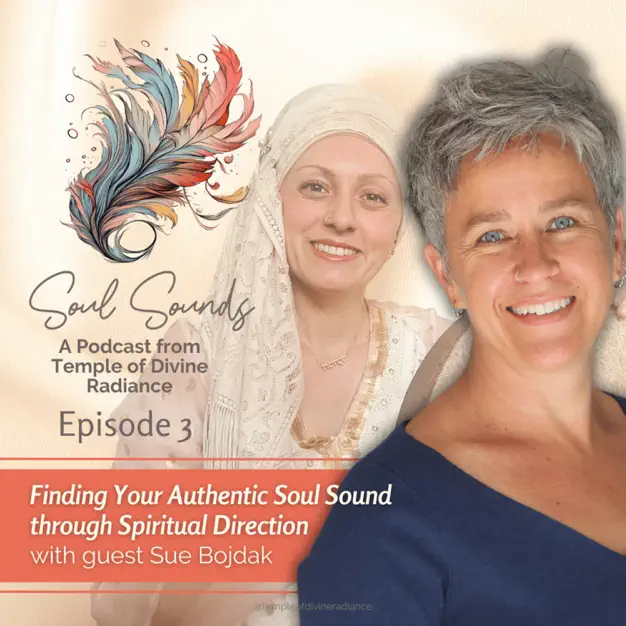
Finding Your Authentic Soul Sound through Spiritual Direction

I had the pleasure and the privilege of sitting down with Lisa Moriah to talk about my roles and the meaning behind them, my own journey as a Jewish convert, and the intimate journey of transitioning from one spiritual foundation to another. We also explored the concept of reclaiming aspects of previous traditions and the exploration of the Divine Feminine. (Wasn’t Mary just a Jewish girl?)  And we talked about the spaciousness in Jewish practice.   You can listen here: https://podcasts.apple.com/us/podcast/soul-sounds-podcast/id1712253654?i=1000639431623

Coming Home to Yourself: A Yom Kippur Sermon

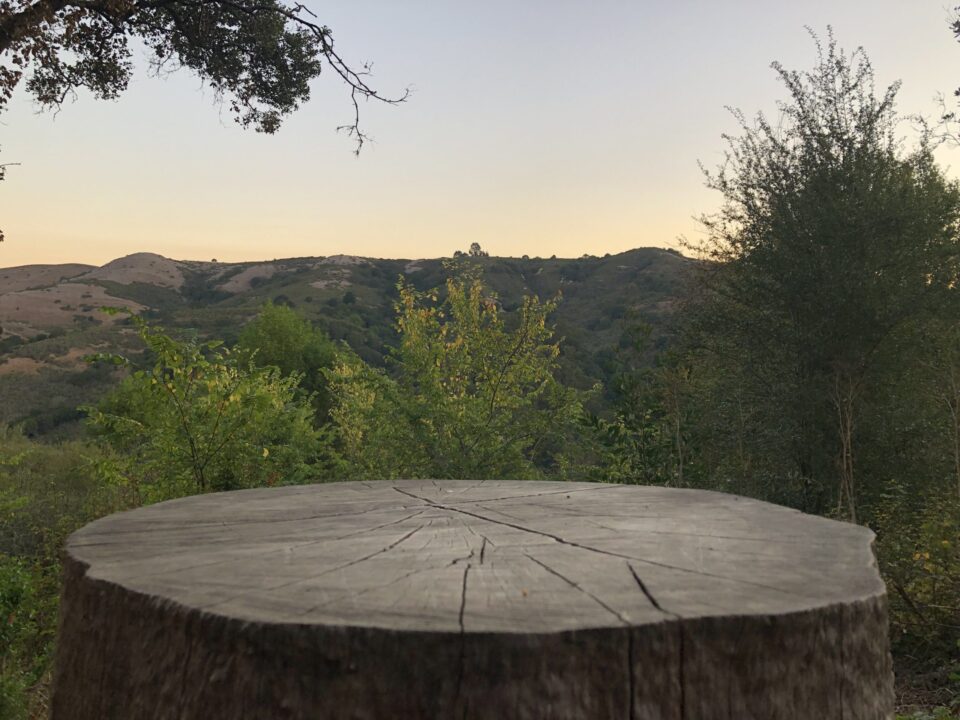
Such Silence – a poem by Mary Oliver As deep as I ever went into the forest I came upon an old stone bench, very, very old, and around it a clearing, and beyond that trees taller and older than I had ever seen. Such silence! It really wasn’t so far from a town, but it seemed all the clocks in the world had stopped counting. So it was hard to suppose the usual rule applied. Sometimes there’s only a hint, a possibility, What’s magical, sometimes, has deeper roots than reason. I hope everyone knows that. I sat on the bench, waiting for something. An angel, perhaps. Or dancers with the legs of goats. No, I didn’t see either.  But only, I think, because I didn’t stay long enough. Across the street from my house is a hill and if I go up and up and up that hill, I’ll find myself on a ridge overlooking Tilden Regional Park.  A short way along the fire trail on that ridge is a tree stump, cut flat and rubbed smooth by the years.  It’s just about waist high for me, easy to clamber onto, and perfectly-sized to hold my cross-legged self.  That stump is one of my sacred spaces, a space that I seek out when I need to remember who I am and that I am profoundly connected to the cosmos.  And no, I haven’t yet seen angels or dancers with the legs of goats, but I can sit there listening to the natural and urban sounds blend, surrounded by morning fog or shielding my eyes from the sun as it peeks over the hill across the canyon, and I can feel myself sink down into the earth through the roots of this old stump, and extend up and out to the edges of our expanding universe. And I can know with a deep sense of knowing that I am part of the fabric of creation, whole and holy. Where are your sacred spaces? Where do you go to know yourself, to remember yourself?  Perhaps like me you can easily tick off a few places.  For me it’s also at the edge of the ocean as I lose myself in the majesty and motion of the sea and its thunderous presence.  And it’s in the arms of my beloved on a no-alarm morning where I can listen to the birds in the backyard and remember that I am safe and loved.  Perhaps those places are harder for you to find.  Maybe they are in a memory or a moment in time or in far-flung places that you have touched only briefly. The traditional text we read on Yom Kippur teaches that “God spoke to Moses after the death of the two sons of Aaron who died when they drew too close to the presence of God.”  (Leviticus 16:1)  God tells Moses to let his brother Aaron know, as if it weren’t already apparent from the experience of his children, not to come into the Holy of Holies, the inner shrine of the Mishkan, our portable desert temple, whenever he feels like it.  “For I appear in the cloud over the cover.” says God.  (Leviticus 16:2).  Then God proceeds to explain the circumstance in which Aaron is invited in, which is the temple ritual for Yom Kippur. Aaron is to bathe himself, put on special vestments, and bring particular offerings – a bull for the sins of himself and his household – and a ram as a burnt offering.  God instructs Aaron regarding the two goats, one of which is made into a sin offering to God and the other upon which Aaron lays all of our sins before it is driven into the wilderness.  There is blood and fire and a cloud of incense which protects Aaron from the intensity of his encounter with God, “lest he die.” (Leviticus 16:13)  At the end of all of this, on this day of atonement, the people of Israel are made pure again. “This shall be to you a law for all time,” the text teaches, “to make atonement for the Israelites for all their sins once a year.” (Leviticus 16:34)  A few hundred years later, the first temple was built in Jerusalem and for most of the next 1000 years, this is how we observed Yom Kippur, with the high priest making atonement for us each year. The 13th century mystical text, The Zohar, adds another small detail of this temple ritual, the rope tied around the Kohen Gadol, the High Priest’s leg.  “Rav Yitzchak said”, the Zohar reports, “‘One rope was tied to the Kohen’s leg when he went in [to the Holy of Holies], so that should he die there they could pull him out.’” (Zohar on Parashat Emor 102a)  So dangerous is it to encounter God with this kind of intimacy, this kind of intensity, that it requires an emergency plan to reclaim the body of the High Priest if he doesn’t make it out alive. Today, on Yom Kippur 5784, our practice has changed but our intention remains the same.  Our mission here is to bring our whole messy selves to God, to reconnect with our sense of the divine, with what is holy in us and around us, and to recommit to becoming expressions of that holiness in the year ahead.  What might that look like for you? When I lived for a year in Jerusalem as a student in the early 1990s, it was still possible to go up onto the Temple Mount. I was able to enter the Dome of the Rock and see the exposed earth that is, according to Muslim tradition, where Abraham nearly sacrificed Isaac and from whence the Prophet Mohammed lifted off on his journey into heaven.  Ultra-Orthodox Jews won’t visit the Temple Mount, even in the seasons when that is politically possible, for fear that they will accidentally walk into the space that is the Holy of Holies, a space…

What Stays with You

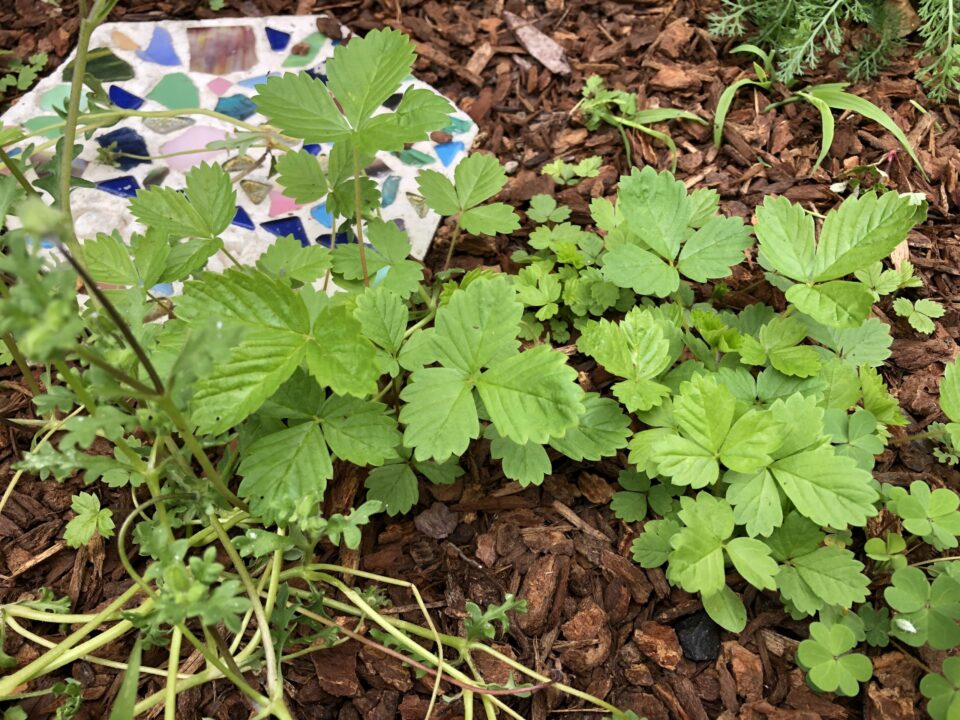
We used to live in a too-small, too-crowded house with too many children.  Our small deck was my sanctuary where I created a container garden.  One season I decided to plant strawberries.  When I went looking for starts at my favorite nursery, I couldn’t find “regular” strawberries, just some little alpine varietal.  Being the lazy gardener that I am, I bought them and figured they would be fine.  They grew well and created the tiniest bits of strawberry you ever saw.  It was a disappointment to be sure, until I discovered that my beloved, who is ambivalent about “regular” strawberries, loves them.  Their tartness is totally her jam, a perfect little treat.  It became a gardening ritual to harvest them every few days and make an offering to her of the day’s tiny handful of tiny berries. When we moved to our current home, we had plenty of dirt for actual gardening.  Many of my plants moved out of their containers and into the dirt.  But my wooden strawberry container just landed on top of the dirt.  Over time the roots made their way right through the bottom and into the soil, and small strawberry plants started to pop up around the container.   When the water heater needed attention, the repair guy moved the container to get access, thereby ripping out the roots of the strawberries.  They did not recover.  A few months later a couple of young men fixed our leaning fence and successfully trampled the renegade berries that had been growing outside of the box.  When I went to my favorite nursery to replace my berries, I could only find “regular” strawberry starts.  It was a disappointment to be sure.  But being a lazy gardener, I let it go and replanted that section of the garden with different plants. Upon returning from a recent trip, I checked on my garden and suddenly there are new strawberry plants popping up everywhere.  It turns out they have a staying power that I had not anticipated.  And now I am anticipating a new crop of tiny tart berries. In spiritual direction this week a client and I were reflecting on a period of growth in their life and my strawberries became a metaphor.  What had appeared to be not so generative and definitely not linear turned out to have unexpected offerings and a kind of staying power that is supporting their emerging direction.  Amen.  It turns out that you never really know which experiences, skills, connections, pieces of yourself will stay with you, popping up again and again in unexpected places with unanticipated offerings. 

Saying Yes to Ritual

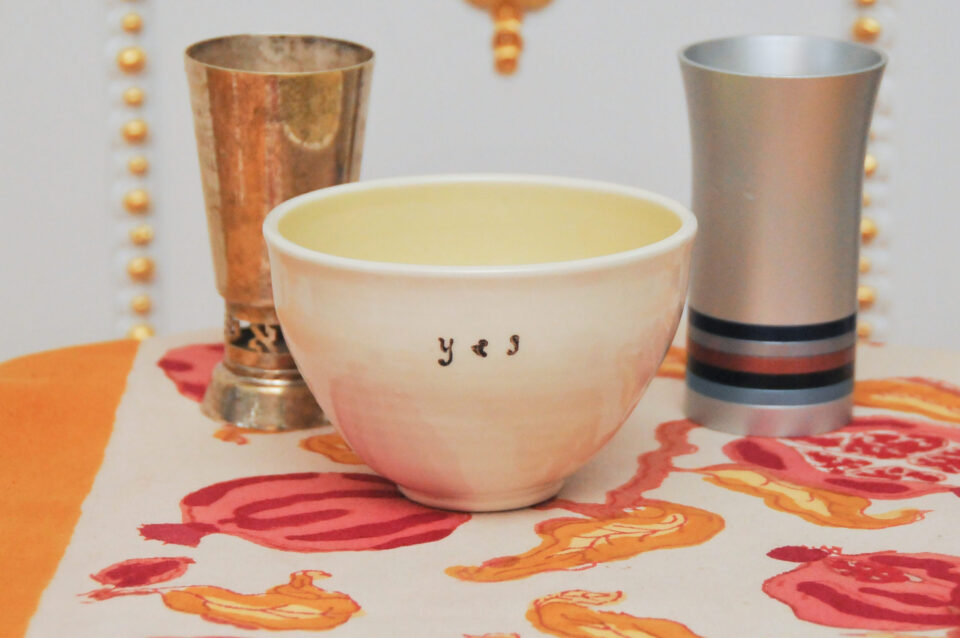
When I was a teen, I tried to find space for myself in the tradition of my childhood.  My mother encouraged me to talk with her spiritual director, a sister of St. Joseph.  I told the sister about my sense of myself as an outsider in our patriarchal tradition, including my alienation from masculine God language.  She told me a story about praying together in a community of people speaking many different languages.  How beautiful it was for each person to be praying the same liturgy in their own language, a cacophony of connected prayer.  She invited me to make space for myself by bringing the language I wanted to pray.  I took a prayer book from church and rewrote it with inclusive language.  Then I brought that prayer book to mass with me and prayed with it again and again until I became accustomed to praying in my own voice. Sister Ann dePorres liberated me into a life where I could put myself in dialogue with the religious practices I encountered in order to adapt, adjust, and create prayer and ritual that was both mine and communally connected.  It’s like praying the Amidah, the silent communal prayer at the center of Jewish services.  We pray aloud and we pray silently, together and apart, in community and alone with ourselves and the Divine.  Unshackled by the limitations of tradition, I became an enthusiastic experimenter and playful creator of ritual.   The first time I got married, lesbian weddings were still an oddity, something people were inventing.  Bound by the limitations of our families’ homophobia, and perhaps also our own, my partner and I got to work creating a ritual that would sanctify our commitment to one another.  We read the one book chronicling the emerging concept of lesbian weddings, pored over guides explaining the architecture of Jewish weddings, and studied the Book of Ruth which some had begun to read as a model for intimate female partnership.  In the end we created a kind of deconstructed Jewish wedding with time alone and time in community, rich with symbolism and ritual power.  It was beautiful, authentic, and real.  We gently and insistently made space for ourselves to celebrate our love. This past month I got married for the second time.  Thirty years later and having navigated myriad obstacles to be standing strong in our ten-year relationship, I found myself longing to be held by the rituals of the tradition of my adulthood.  I wanted to gather loved ones in real time and space, stand under the chuppah (Jewish wedding canopy), and consecrate myself to my beloved “according to the laws of Moses and Israel.”  When the rabbi we chose to marry us offered us new rituals and creative possibilities, we waved them off opting for a traditional Jewish wedding where she was in the driver’s seat.  Yes, we did thoroughly deconstruct the ketubah (Jewish wedding contract) and co-create with an artist friend a new kind of document that honors our commitment to one another.  But on the wedding day, I got to show up as a bride, not an orchestrator of new ritual, and just stand under the chuppah, surrounded by our young adult children and other loved ones, and immerse myself in the sounds of the seven wedding blessings and the ritual power of the moment.  What a gift to just be present!  And what a blessing to arrive at a point, in history and in my own life, where my voice naturally blends into the cacophony of Jewish voices across time and space and I am able to invent and be held in equal measure

Kayaking as a Spiritual Practice

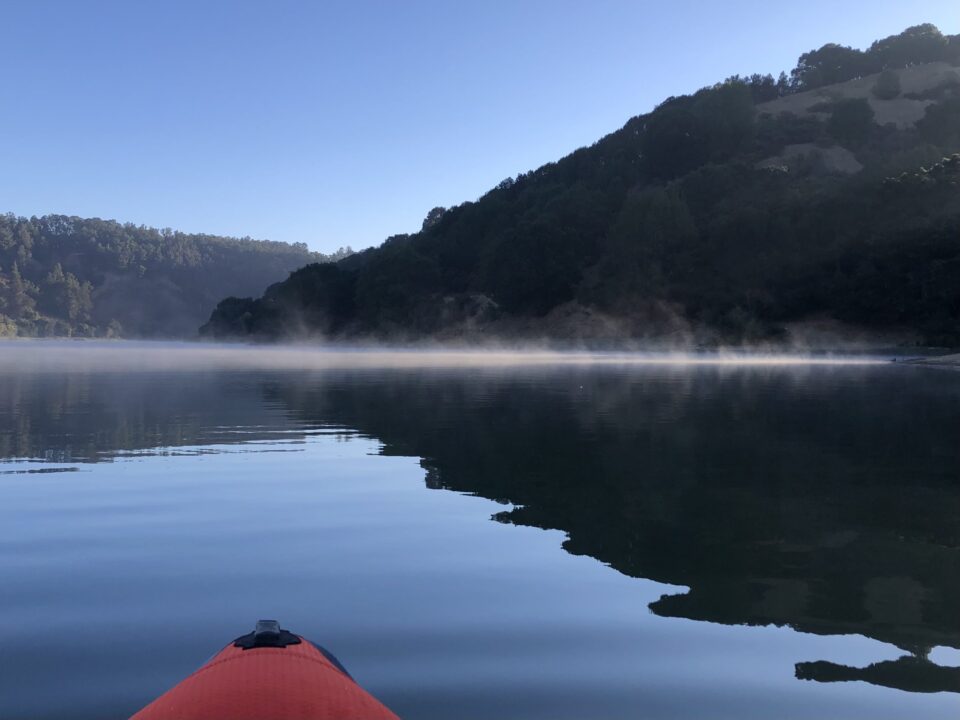
Years ago someone posted a photo of herself sitting in her new inflatable kayak in her living room.  She was so excited to have finally taken the plunge.  “I want one,” I said. “Do it,” she replied.  And so for years I imagined the day I would have my own kayak, or stand-up paddle board, no kayak.  No wait, maybe I won’t use it.  Who am I kidding?  I don’t have time to kayak.  Where would I even go?  Maybe someday we’ll move somewhere very near water where kayaking will be a thing I could do every morning …  Until late one evening this past spring, I took the plunge and bought my own inflatable kayak.    At first I saw it as a tool of adventure.  I would explore all of the waterways in the Bay Area.  I would go on day-long adventures across Northern California.  Or at least I would learn how to navigate the tides and currents of the San Francisco Bay, the most difficult body of water that is also nearest to me.  I studied the Bay Water Trail and the tide charts.  I obsessed about timing.  And I had good/bad kayak adventures, easy and hard, and a little bit harrowing, beautiful and ugly and almost always surprising.  It was fun and challenging.  Until one day I just wanted to kayak without the study and the drama and the most-of-the-day commitment, so I turned to Lake Chabot, one of our local reservoirs, which promised to be boring but easy.  And just like that kayaking changed for me.  It became a spiritual practice.   I go early in the morning, when the waters are their most still.  As I inflate my kayak in the parking lot, I am warmly greeted by the walkers and runners who use the path around the lake.  On the water there are just a few boats, folks who are fishing, sometimes another kayaker.  I know now to paddle to the fork on the right where it gets reedy.  That’s where the birds hang out, egrets and great blue herons, cormorants and ducks.  Last week I came upon a flock of white pelicans (not common in NorCal).  Another time I followed a group of otters across the lake.  There are songbirds in the trees on the shore and one morning a stag passed by on his way up the trail.   The adventure it turns out is in the quiet stillness. It’s in the mist rising from the water, the sun peeking over the hills, the way the lake changes as you go, rippling here, bubbling there, and over here smooth like glass.  It’s the hush and the chirruping.  It’s watching the way a bird takes off from the water when you’ve come too close, the sound of their wings in the air.  It’s the revelation in that first stroke away from shore that you are not going to sink because you are being held by the cosmos in this eternal moment. 

Breakfast with God

I have been trying to find my way into a regular morning spiritual practice for a long time.  Over the years it has proven to be anything but regular, taking on many different shapes.  I have sneaked out from my overfull house to settle myself on an old towel among the plants on our back deck.  I have chanted prayers in the car on the way to work, back from school drop-off, or headed to the pool.  I have snuck a whisper of prayer into a quick shower before the Zoom I am late for.  I have had the luxury of a long prayerful yoga session in the garden.  I have sat on my favorite stump overlooking the canyon of the regional park just up the hill, listening to the birds and the wind and the children. More recently I have been enjoying breakfast with God two days a week.  Those are the days that I commute one hour to the synagogue where I work, arriving around 8am.  When I first returned to working in the building after the pandemic, I tried to do a little prayer in my office.  I lit a candle, rotated my chair to face away from my desk, and set the timer on my meditation app, ready for some silence and morning gratitude.  After 5 or 10 or 15 minutes, I would pivot back, blow out the candle, and dig into breakfast and the morning’s emails.  It was efficient but not that satisfying.  In that space, the tasks of the day were nipping at my brain, nudging me to get started already. So one day, I migrated upstairs to the empty sanctuary.  And I brought my tea.  There I could pull up any chair, or find a spot on the floor, and breathe into the open holy space.  Before long I brought breakfast with my tea, and my meditation timer, and my prayers, and blended them into a new morning ritual of breakfast with God.  Some days there’s a lot of silence, or singing, a little bit of movement.  Other days there’s really just breakfast and the soothing comfort of being in the quiet company of an old friend.  

Finding Joy in the Trinity Alps

I went on my first solo camping trip this summer. Just a few days, to a favorite camping spot in the little visited wilderness of the Trinity Alps. In spite of decades of experience and a car loaded down with luxury gear for the middle-aged camper, I was unaccountably nervous. Until I hit the road and my body/soul immediately remembered why I camp, why I seek out the wilderness, why I need time alone. There was acute luxury in attending to only my needs for a time. There was a ridiculously spacious 3-person tent for one, eating out of the pot I cooked in, kayaking every day, stillness that made it possible to notice and then watch the woodpecker make their way up the tree and to observe the encounter between a lizard and a caterpillar. And I missed my children, my camping buddies of the last 20 years, acutely: the noise and chaos of them, their companionship, our shared laughter, games and adventure. Really I missed the boys they were before they became the men they are now. Then I missed my Gram Phyl and the way she taught me to listen to birds in the morning, and my own childhood. As I lay there in my hammock looking up into the canopy of pines, I felt the whole expanse of myself over my 50 years, all held in one moment, complete with all of the feelings. Rabbi Alan Lew writes that, “Joy is a deep release of the soul, and it includes death and pain. Joy is any feeling fully felt, any experience we give our whole being to.” I realized it was joy I was feeling. The joy of being alive, deeply at one with the universe, and whole/holy. Spiritual direction is a practice that helps us attune to the joy in our lives. If you encounter folks who could benefit from attending to that attunement, I hope you’ll invite them to consider my spiritual direction practice. And if you are looking for that opportunity, I have many wonderful colleagues to recommend. I’m also happy to trade camping stories, great ideas for where to camp, and gear recommendations.